
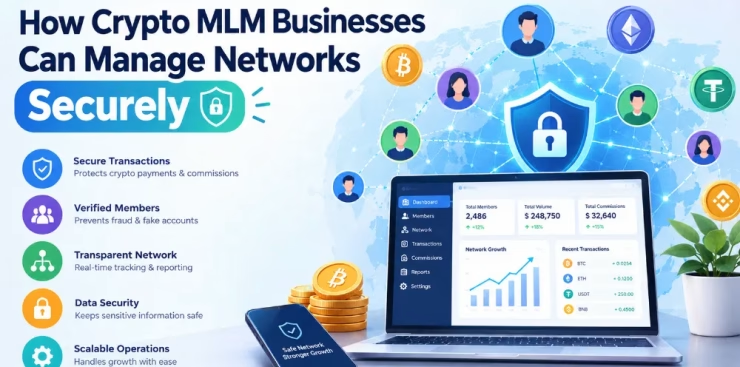
Network marketing runs on trust. So does crypto. Put them together and the stakes get high fast. Your members are trusting you to keep their money safe, pay their commissions correctly, and protect their personal details. In a crypto MLM business, money moves in seconds and can’t be pulled back, so a single security slip can undo years of reputation-building almost overnight.
Phishing, wallet drains, smart contract exploits, and tighter regulation are all increasing. Security can’t be something you bolt on after launch. This guide walks through what crypto MLM businesses can realistically do to keep their networks safe, and keep members around for the long run.
Why Security Matters More in Crypto MLM
In a traditional MLM, payments go through banks and processors. If something goes wrong, there’s usually a fraud team to call or a chargeback to file. Crypto has no such safety net. Once a transaction is confirmed on the blockchain, it’s done.
That’s only one of the pressures you’re dealing with:
- Irreversible transactions: Stolen funds are rarely recovered.
- Big, spread-out user bases: Thousands of members means thousands of possible weak points.
- Complex commission logic: A bug in your payout rules can quietly drain company funds.
- Regulatory attention: Authorities in many countries keep a close eye on crypto-based network marketing.
Knowing where the risks sit is the first step to managing them.
1. Start With a Solid Technical Foundation
Get the architecture right
The way your platform is built decides how much risk you’re carrying from day one. Look for:
- Encrypted databases for member and transaction data
- Role-based access, so staff only see what their job requires
- Regular backups kept in separate, secure locations
- Infrastructure that can handle traffic spikes and DDoS attempts
Have your smart contracts audited
If your compensation plan or payouts run on smart contracts, get an independent third-party audit. A good auditor will find problems like reentrancy bugs, overflow errors, and weak access controls before an attacker does. And don’t treat it as a one-off: audit again after every major update.
2. Protect Your Wallets and Funds
If there’s one area to get right, it’s this one.
- Use multi-signature wallets so no single person can approve big withdrawals.
- Keep most funds in cold storage, with only a small working balance in hot wallets.
- Add withdrawal limits and cooling-off periods for new accounts and unusually large requests.
- Whitelist withdrawal addresses so members can only send funds to wallets they’ve pre-approved.
- Never keep private keys in plain text, or on internet-connected servers without hardware security modules (HSMs).
3. Make Member Logins Harder to Break
Most account takeovers come down to weak or stolen credentials. A few habits make a big difference:
- Mandatory two-factor authentication (2FA): Authenticator apps are safer than SMS codes.
- Strong password rules plus checks against known breached passwords
- Login alerts and device recognition to flag anything unusual
- Session timeouts for inactive accounts
- Anti-phishing codes in official emails, so members can spot fakes
4. Put KYC and AML Checks in Place
Know Your Customer (KYC) and Anti-Money Laundering (AML) checks protect your members and your business. They help you:
- Confirm real identities and block fake or duplicate accounts
- Spot suspicious transaction patterns
- Meet regulatory expectations where you operate
- Build credibility with banks, exchanges, and payment partners
Pick KYC tools that are quick for members and respectful of privacy. Once you collect identity documents, protecting them is on you.
5. Keep Your Compensation Plan Transparent and Sustainable
Security isn’t only about code. A plan that relies mostly on recruitment, rather than real product or service value, invites legal trouble and tends to collapse. To stay on the right side of both regulators and members:
- Tie commissions to real products, services, or platform usage
- Avoid promising fixed or guaranteed returns
- Share clear income disclosures
- Make your plan logic auditable so members can verify their payouts
Transparency cuts down on disputes and fraud, and it shows you’re building something meant to last.
6. Watch Your Network in Real Time
You can’t protect what you can’t see. Real-time monitoring helps you catch trouble early:
- Transaction monitoring for sudden withdrawal spikes or rapid fund movement
- Activity logs and audit trails for every admin and member action
- Automated alerts for bursts of failed logins, odd IP addresses, or several accounts on one device
- Fraud detection rules that flag self-referral loops, fake downlines, and commission manipulation
A good admin dashboard should put all of this in one place.
7. Safeguard Member Data
Personal data is a prized target for attackers. To protect it:
- Encrypt data in transit (TLS/SSL) and at rest
- Collect only what you actually need
- Follow data protection laws like GDPR where they apply
- Publish a clear, honest privacy policy
- Run regular vulnerability scans and penetration tests
8. Teach Your Members and Leaders
You can have the best technology in the world and still lose a member’s funds because they shared their seed phrase with a scammer. So make security education part of onboarding and keep it going:
- Show members how to recognize phishing and impersonation scams
- Say plainly that your team will never ask for private keys or passwords
- Share security tips through newsletters, webinars, and training sessions
- Give leaders an easy way to report suspicious activity
9. Have an Incident Response Plan Ready
No system is flawless, so it pays to plan for the bad day. A solid plan covers:
- A defined team with clear responsibilities
- Fast steps to isolate affected systems
- Honest, timely communication with members
- A review afterward to fix root causes
- Regular drills so everyone knows what to do
How you handle an incident often matters as much as whether it happened.
10. Keep Up With Changing Regulations
Crypto and MLM rules vary a lot from country to country, and they keep shifting. Work with legal advisors who understand both industries, review your compliance regularly, and be ready to adjust by region.
Quick Security Checklist
| Area | Key Action |
| Smart contracts | Independent audit before launch and after updates |
| Wallets | Multi-sig, cold storage, withdrawal whitelisting |
| Accounts | Mandatory 2FA and device monitoring |
| Compliance | KYC/AML and clear income disclosures |
| Data | Encryption, access controls, regular pen tests |
| Operations | Real-time monitoring and an incident response plan |
| Members | Ongoing security education |
Frequently Asked Questions
What’s the biggest security risk in a crypto MLM business?
Compromised wallets and weak access controls. Because crypto transactions can’t be reversed, these are the most common and the costliest.
Do crypto MLM platforms need KYC?
In most cases, yes. KYC and AML checks reduce fraud, support compliance, and make members feel safer.
How often should a crypto MLM platform be audited?
Run a full audit before launch and again after major updates. In between, keep monitoring and schedule periodic penetration tests.
Can software really prevent MLM fraud?
It can’t wipe fraud out entirely, but activity logs, automated alerts, and rule-based detection make suspicious behavior much easier to catch and stop.
Conclusion
Keeping a crypto MLM network secure isn’t about one big fix. It’s about layers: a strong technical base, protected wallets, solid authentication, KYC/AML checks, a transparent compensation plan, real-time monitoring, and members who know what to watch for. Businesses that invest in security early protect their members’ money and their own reputation, and that’s what long-term growth is built on.
Having the right technology partner makes the whole job easier. Lead MLM Software offers solutions built to help crypto MLM businesses manage their networks with stronger security, smoother operations, and more confidence.