
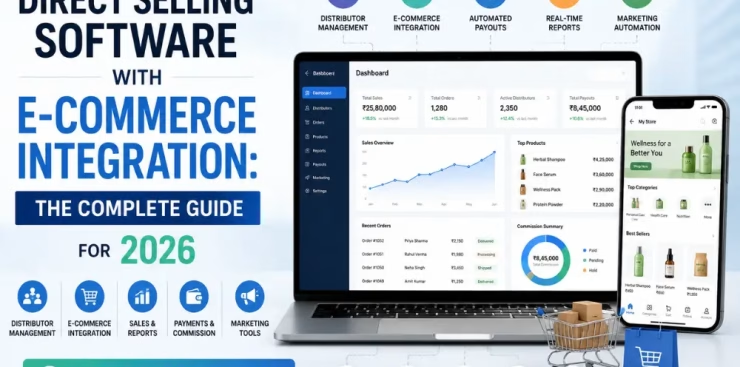
What Is Direct Selling Software with E-Commerce Integration?
Direct selling software is a specialized platform that manages the operational backbone of network marketing, multi-level marketing (MLM), and party-plan businesses. It handles distributor management, compensation plan automation, commission calculations, genealogy trees, and compliance reporting.
When this software is tightly integrated with an e-commerce layer, distributors and customers can browse a product catalog, place orders, track shipments, and process payments, all within the same ecosystem. No data silos, no manual reconciliation, no missed commissions.
“Unified platforms eliminate the friction between selling and getting paid, and that changes distributor behavior overnight.”
Why E-Commerce Integration Is No Longer Optional
Modern consumers expect to buy whenever and wherever they want. If a prospect lands on a distributor’s replicated website at 11 pm and finds no way to purchase, you’ve lost that sale. Integrated e-commerce closes that gap by giving every distributor a live, branded storefront that runs 24/7.
Key Features to Look for in an Integrated Platform
1. Multi-Currency and Multi-Language Support
Direct selling companies frequently operate across borders. Your platform must handle currency conversion, tax rules by jurisdiction, and interface localization, all without requiring a separate ERP system.
2. Flexible Compensation Plan Engine
Whether you run a binary, matrix, unilevel, stair-step, or hybrid plan, the compensation engine must calculate volumes, ranks, bonuses, and overrides correctly on every order and do it in real time, not in a nightly batch process.
3. Distributor Self-Service Portal
A modern distributor portal lets representatives enroll new team members, manage their personal volume, view their genealogy, download marketing assets, and request payouts, reducing support tickets dramatically.
4. Secure Payment Gateway Integration
Support for Stripe, PayPal, Razorpay, and local payment methods ensures customers can complete purchases with confidence. PCI-DSS compliance is non-negotiable.
5. Subscription and Autoship Management
Recurring orders (autoship) are the revenue backbone of many direct selling companies. The e-commerce layer should handle subscription billing, pause/resume logic, and renewal reminders natively.
6. API-First Architecture
An open API allows you to connect third-party CRMs, email marketing tools, analytics dashboards, and social commerce platforms as your business scales.
Business Benefits of an Integrated Approach
Companies that unify their direct selling operations and e-commerce on a single platform report significantly lower operational costs, faster onboarding for new distributors, and measurably higher distributor retention rates within the first 12 months.
- Eliminates double-entry and manual reconciliation between order and commission systems
- Gives management real-time visibility into sales volume by region, product, and distributor level
- Enables targeted promotions and flash sales that automatically apply to commission calculations
- Accelerates expansion into new markets with localized storefronts launched in days, not months
- Reduces compliance risk with built-in genealogy auditing and income disclosure reporting
- Improves customer experience with order tracking, loyalty points, and personalized recommendations
How to Evaluate Vendors: A Practical Checklist
Before signing a contract with any direct selling software provider, run through these evaluation criteria:
- Does the platform support your specific compensation plan without heavy customization?
- Is the e-commerce module built natively or stitched together via a fragile integration?
- What is the uptime SLA, and how does the vendor handle traffic spikes during launches?
- Are replicated websites mobile-optimized and SEO-friendly out of the box?
- Does the platform include built-in fraud detection for order and enrollment abuse?
- What migration support does the vendor provide if you’re switching from a legacy system?
- Is there a demo environment where your team can test workflows end-to-end before going live?
Implementation Best Practices
Start with a Pilot Group
Roll out the integrated platform to a small cohort of your top distributors first. Their feedback will surface UI/UX issues and configuration gaps before a full-company launch, protecting your revenue and reputation.
Train Before You Launch
Even the most intuitive platform requires onboarding. Create short video tutorials for the distributor portal, the checkout flow, and the commission dashboard. Distributors who understand the tool use it consistently.
Define Your Data Governance Rules Early
Decide upfront how customer data, purchase history, and distributor genealogy records will be backed up, exported, and if required, deleted under privacy regulations like GDPR or India’s DPDP Act.
The Future of Direct Selling Technology
AI-powered product recommendation engines, social commerce connectors for Instagram and WhatsApp, and blockchain-verified commission ledgers are moving from experimental to mainstream. The direct selling companies investing in modern, integrated platforms today will have a significant technological moat by 2027.
“The next wave of direct selling growth belongs to companies that treat their software stack as a competitive advantage, not a back-office cost center.”