
Multi-level marketing has come a long way from spreadsheets, paper commission slips, and manual downline tracking. As the industry grew more complex, so did the technology behind it. Today’s MLM companies operate in a completely different digital landscape than they did even a decade ago, and the software powering their businesses has evolved just as dramatically.
If you’re running an MLM business, or planning to launch one, understanding how MLM software has changed can help you make smarter decisions about the platform you choose. Let’s break down the key differences between old and modern MLM software.
The Early Days: What Old MLM Software Looked Like
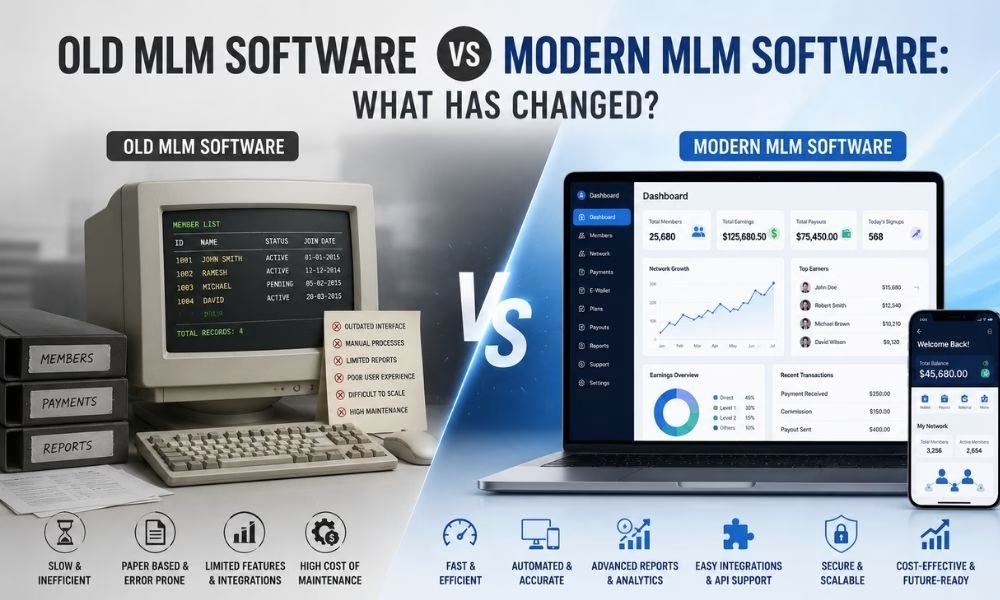
In the early stages of the direct selling industry, software solutions were basic, rigid, and often built for a single purpose: calculating commissions. Most systems were:
- Desktop-based, requiring installation on a single computer with no remote access
- Limited to one or two compensation plans, forcing companies to adapt their business model to the software instead of the other way around
- Manually updated, meaning IT teams had to intervene for even small changes
- Disconnected from other business tools, with no integration for payment gateways, CRM, or e-commerce
- Lacking real-time reporting, so distributors and admins had to wait for batch-processed updates
For a small MLM company with a handful of distributors, this was manageable. But as networks grew into the thousands or millions, these limitations became serious bottlenecks, slowing down commission payouts, frustrating distributors, and making it hard to scale.
The Shift: Why Change Was Necessary
As MLM companies expanded globally and distributors began expecting instant access to their business data, the old systems simply couldn’t keep up. Several factors pushed the industry toward modernization:
- Globalization: companies needed multi-currency, multi-language, and multi-country support
- Mobile-first distributors: network marketers wanted to manage their business from a phone, not just a desktop
- Complex compensation plans: binary, matrix, unilevel, board, and hybrid plans required flexible engines
- Data security concerns: cloud infrastructure and encryption became non-negotiable
- Customer expectations: instant e-wallets, real-time genealogy trees, and automated payouts became the norm
Modern MLM Software: A Complete Transformation
Today’s MLM software is built to be dynamic, scalable, and distributor-friendly. Here’s what has changed:
1. Cloud-Based Access
Modern platforms run on the cloud, giving admins and distributors access to their dashboards from anywhere, on any device, at any time. No installations required.
2. Multiple Compensation Plan Support
Instead of locking businesses into one plan, modern software supports binary, matrix, unilevel, board, generation, and custom hybrid plans, often switchable within the same system.
3. Mobile Apps and Responsive Dashboards
Distributors now expect a mobile app experience. Modern MLM software includes native or responsive apps for tracking downlines, commissions, and rank advancement on the go.
4. Real-Time Reporting and Analytics
Live dashboards show genealogy trees, sales volume, commission calculations, and rank progress instantly. No more waiting for end-of-day batch processing.
5. Integrated E-Commerce and Payment Gateways
Modern systems connect directly to online stores, multiple payment gateways, and e-wallets, enabling seamless purchases, instant payouts, and automated commission distribution.
6. Advanced Security and Compliance
With cloud hosting comes better encryption, role-based access control, GDPR-readiness, and regular security audits, protecting sensitive distributor and financial data.
7. Customization and Scalability
Modern MLM software is built with flexible architecture, allowing businesses to customize workflows, add new features, and scale infrastructure as the network grows, without needing to switch systems.
8. Automation Everywhere
From automated commission runs and tax calculations to email/SMS notifications and rank promotions, modern software minimizes manual work and human error.
Old vs Modern MLM Software: Quick Comparison
| Feature | Old MLM Software | Modern MLM Software |
| Accessibility | Desktop-only | Cloud-based, accessible anywhere |
| Compensation Plans | Single, rigid plan | Multiple, flexible plans |
| Mobile Support | None | Native/responsive apps |
| Reporting | Batch-processed, delayed | Real-time dashboards |
| Integrations | Minimal to none | Payment gateways, CRM, e-commerce |
| Security | Basic, local | Advanced encryption, cloud security |
| Scalability | Limited | Highly scalable |
| Customization | Difficult, costly | Flexible, modular |
What This Means for Your MLM Business
If you’re still relying on outdated MLM software, chances are you’re facing slow commission cycles, distributor frustration, limited reporting, and difficulty scaling into new markets. Migrating to a modern solution isn’t just an upgrade, it’s often the difference between stagnation and sustainable growth.
Modern software doesn’t just make life easier for your admin team; it directly impacts distributor retention and satisfaction. Distributors who can track their earnings in real time, access their business from a mobile app, and trust the security of the platform are far more likely to stay engaged and productive.
Choosing the Right Modern MLM Software
When evaluating a new MLM platform, look for:
- Support for multiple compensation plans
- Cloud hosting with strong security protocols
- Mobile-friendly distributor experience
- Real-time genealogy and reporting tools
- Seamless third-party integrations
- A track record of reliability and client support
This is where Lead MLM Software comes in. Lead MLM Software offers a modern, feature-rich platform built to handle the complexities of today’s direct selling businesses, from flexible compensation plan engines and real-time reporting to mobile accessibility and robust security. Whether you’re upgrading from legacy software or launching a new MLM venture, Lead MLM Software is designed to help your business scale confidently in a competitive market.